
blog · Consultancy · AI · AI, data and automation · Innovation
Intelligent automation: the difference between saving time and transforming a company
In recent years, automation has become one of the most repeated decisions within companies. The promise is clear: save time, reduce costs and improve efficiency. However, in 2026, a key difference begins to emerge between organizations that simply automate tasks and those that truly transform the way they operate.
Not all automation generates strategic impact. In fact, many initiatives remain superficial improvements that optimize small parts of the process without modifying the entire system. Isolated tasks are automated, new tools are incorporated and some speed is gained, but the business continues to operate under the same logic as always.
There appears the difference between automating and automating with intelligence.
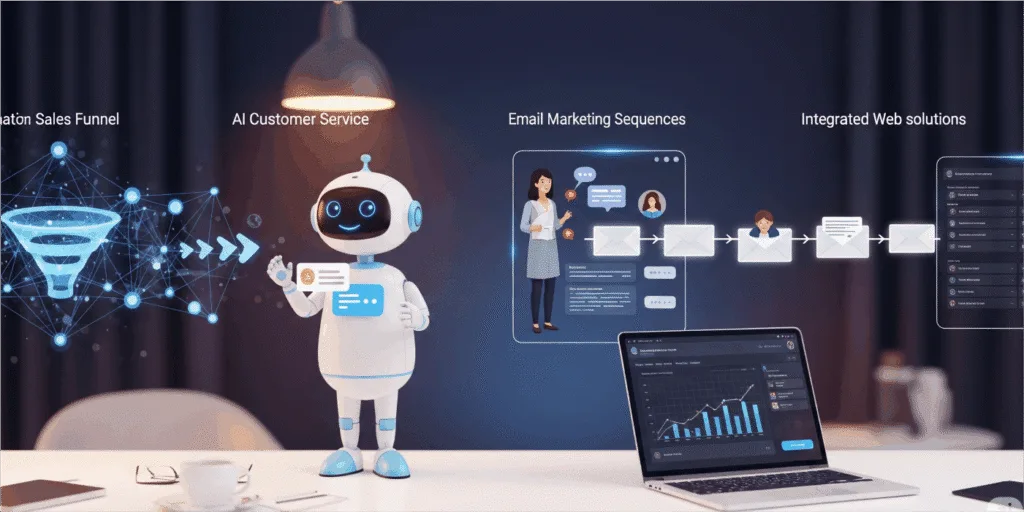
Traditional automation usually focuses on specific tasks. Repetitive processes, administrative burdens, automatic responses or basic integrations between systems. This type of automation is useful and, in many cases, necessary. It allows you to free up operational time and reduce human errors. But its impact has a limit.
Intelligent automation, on the other hand, does not focus solely on the task, but on the entire system. It starts from a deeper question: what part of the business needs to be redesigned to function better?
This change of focus is key. Because it's not just about doing the same thing faster, but about doing it better.
A company that automates intelligently first reviews its processes. Understand how information flows, where bottlenecks are generated, what decisions are repeated and what tasks do not provide real value. Only later does it incorporate technology to redesign those flows.
At this point, artificial intelligence begins to play a differential role. It not only executes tasks, but also allows you to make decisions based on data, anticipate behaviors and adapt processes in real time. This transforms automation into a dynamic system, not a rigid sequence.
For example, automating the sending of responses to clients is not the same as designing a system that understands the context of each query, prioritizes cases, refers complex situations to humans, and learns with each interaction. In the first case, time is saved. In the second, the experience is transformed.
The same happens in areas such as marketing, operations or finance. Automating reports can improve efficiency. But automating insight generation and decision making changes the way the company acts.
Another key aspect of intelligent automation is integration. Many companies accumulate tools that do not communicate with each other. This creates information silos and limits the impact of any improvements. When automation is designed strategically, it connects systems, centralizes data, and allows information to flow consistently.
However, one of the most common mistakes is trying to automate without having previously ordered the processes. Technology does not correct structural disorder. It amplifies it. Automating an inefficient process only makes it faster, not more effective.
Therefore, the companies that manage to transform their operations are those that understand that automation is a consequence, not the starting point.
It is also important to avoid the opposite extreme: total automation without supervision. The incorporation of artificial intelligence does not eliminate the need for human judgment. Strategic decisions, contextual analysis and exception management remain essential. The most effective models combine automation with human intervention at key points.
This hybrid approach allows you to scale without losing control. Technology provides speed, while people provide judgment and direction.
Culturally speaking, intelligent automation also changes the way teams work. When repetitive tasks disappear, the focus shifts to higher-value activities: analysis, creativity, strategy. This not only improves productivity, but also motivation.
Organizations that understand this change do not present automation as a threat, but as a tool to enhance human capabilities. This approach reduces internal resistance and accelerates adoption.
In 2026, the competitive difference will not be in who automates more, but in who automates better. Companies that manage to integrate processes, decisions and technology into a coherent system will operate with greater speed, less friction and better capacity to adapt.
Automate is no longer enough. Transform yes.
At Lab9 we accompany organizations that seek to take that leap. We design intelligent automation strategies aligned with processes, culture and business objectives. Because the true value is not in saving time, but in building companies that work better.
If you need a consulting 1 on 1 with our CEO, schedule your call.