
Consultancy
Hewlett Packard (HP) - The tech microuniverse Silicon Valley: Vol II
Hewlett Packard - currently known as HP Inc. - was from its beginnings a symbol of excellence and excellence within its field. We all once had a brand product, whether in the form of a printer, laptops or gaming computers.
Until it reached global recognition, the company took its first steps in the manufacture of electronic measurement and laboratory elements, since its two founders, William Hewlett and David Packard, were engineers specialized in hardware and software.
However, in 2015, an announcement that had been made the previous year regarding the division of the company into two halves came true: on the one hand, HP Inc. would dedicate itself to computers and printers, and on the other, Hewlett Packard Enterprise, would dedicate its efforts to providing solutions for servers, storage equipment, networks, computer programs and the provision of outsourced services.
Beginnings of Hewlett Packard (HP)
Who would have imagined that Hewlett Packard's magical catapult as a benchmark for computing would be the mouse himself dressed as a magician!
This event took place in history, precisely in the 1930s, a golden age for children's cinema in which Disney gained prominence in the making of these audiovisual productions. After the resounding success of the films “Snow White and the 7 Dwarfs” and “Pinocchio”, the production company began working on its next release called “Fantasía”, which is why a special intervention was required…why? Well, because the latter was a musical-style feature film that needed to guarantee excellent sound reproduction in movie theaters.
Hence the acquisition of about 8 low-frequency oscillators - an instrument used to choose the notes of a musical scale and generate new bands of harmonics - and an electronic machine that allowed the sound effects of the tape to be correctly synchronized, thus configuring a sound system - named "Fantasound" - that would later be the precursor of Dolby Surround.
These sound devices were designed, created and sold for only $70, by Hewlett Packard. Interesting, right? And as a matter of color: these devices were used in at least 12 movie theaters.
The founding stone of Silicon Valley: Hewlett Packard
From the joint work that transformed these young visionaries into emblems of computing during the last years of the 1930s, a sudden change arose.
Being both “pupils” of Stanford University with the mentoring of Frederick Terman - baptized as the “father of Silicon Valley” -, they gathered courage and determination to open their first company in a garage in the city of Palo Alto - in 1939 -, named under the surnames of its founders in the form: Hewlett Packard Company.
Since then, this “small” office is remembered as the “big bang” of the Silicon Valley, since from there dozens and dozens of entrepreneurs were encouraged to populate the west coast of the United States through an innovative spirit.
About 10 years later Palo Alto woke up and became a melting pot of technology and innovation. This was due to a skyrocketing increase in the population - entrepreneurs and non-entrepreneurs -, added to the increase in public policies reflected in the construction of highways, businesses and schools. Likewise, the Stanford Industrial Park - a product of Terman - became an undisputed pole of attraction for existing and new companies that made Palo Alto the nerve center of Silicon Valley.
Phase zero: the garage
The austere nature of the property is obvious. Consisting of a single living room, a half bathroom, a kitchen and a dining room, this was the place that saw two young engineers talk and undertake things that gave rise to the icon of technology in the Silicon Valley and in the entire world.
Above the fireplace we find the first piece of equipment that was built as a commercial product of the company: an audio oscillator (model 200A), which was developed and built manually in the garage behind the apartment for the renowned Walt Disney company.
What the boardroom was is also moving when we remember it as the place where engineers met to discuss their research advances together with their wives. In fact, it was in this place where Lucile - Packard's wife - wrote on a typewriter the specifications of the Hewlett Packard oscillators that had to be sent to potential interested parties. After a few months, the effort took effect and the requests were heard through letters - many of them arrived with money inside.
The renowned garage has quite small dimensions if we talk about a computer company. In a 3x5 meter space, Hewlett and Packard researched, developed and built each and every one of their products with their own hands.
For two years, with the help of a few tool boxes, a hand drill and a work table, unthinkable things happened in this garage that later led them to be known as Hewlett Packard globally.
In fact, our CEO of Lab9 had the opportunity to visit this tourist spot, being amazed by the impressive story that not only speaks of the humility of the beginnings but of how far one can go if not through one's own dreams.
The innovation incubator by HP
In the air of this technological valley there was nothing but creativity and programming codes. There was so much euphoria and multiplication of small entrepreneurs that was generated regarding this place, that David Packard together with his wife believed it was appropriate to create a foundation to finance musical talents for the San Francisco Symphony in 1964. For his part, the engineer Hewlett also considered making a contribution to the community, offering donations to academic entities such as Stanford University and the California Institute of Technology.
In crescendo
In less than a rooster's crow, the company managed to unlock the different levels that every nascent company must experience to diversify its business. As? Manufacturing microwave signal generators, medical devices and pocket calculators.
One year after the inauguration, the temporary office in the form of a garage began to be reduced taking into account the wide demand for the products and services requested, so the company was forced to move its equipment to a new building within the same city.
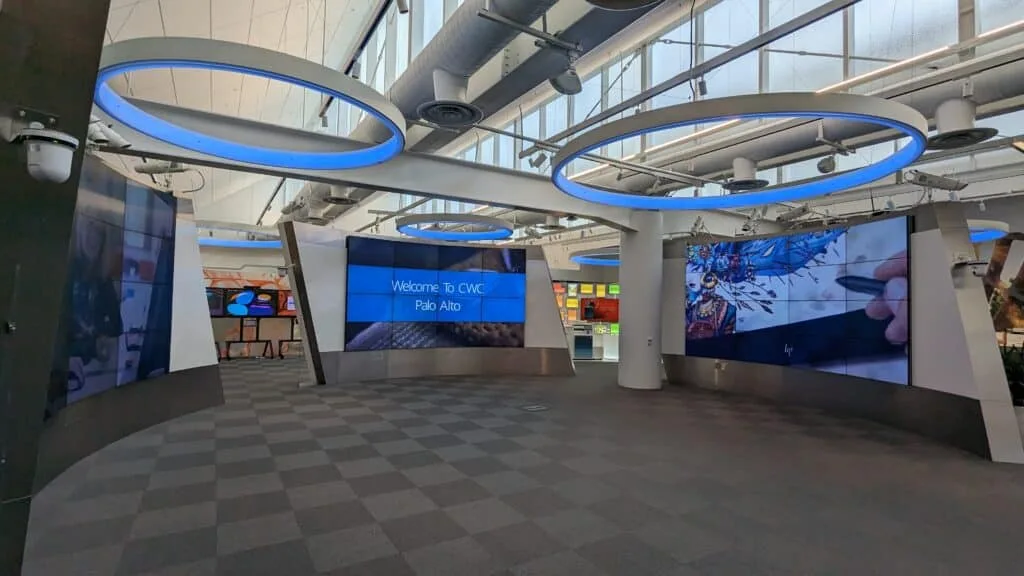
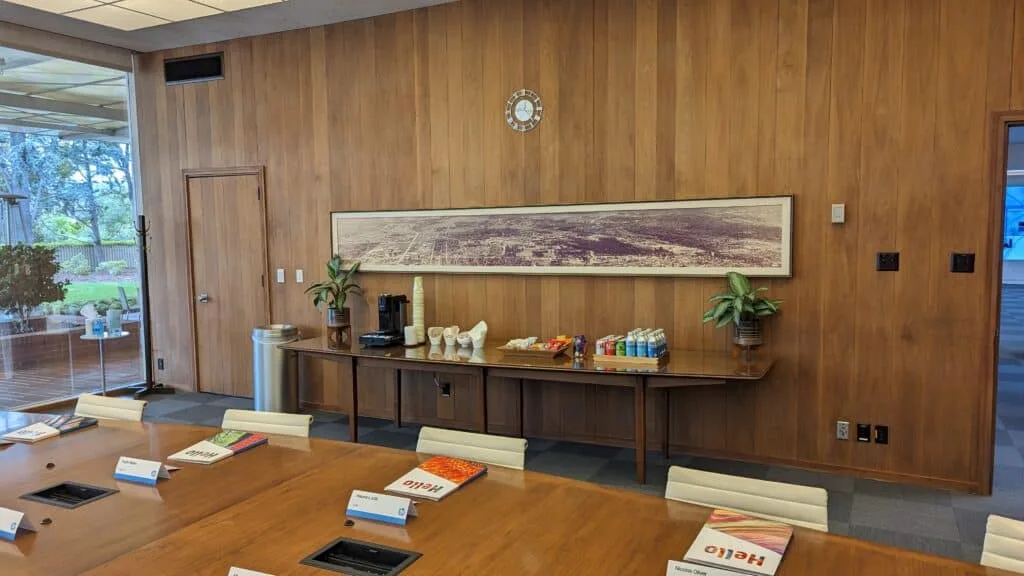
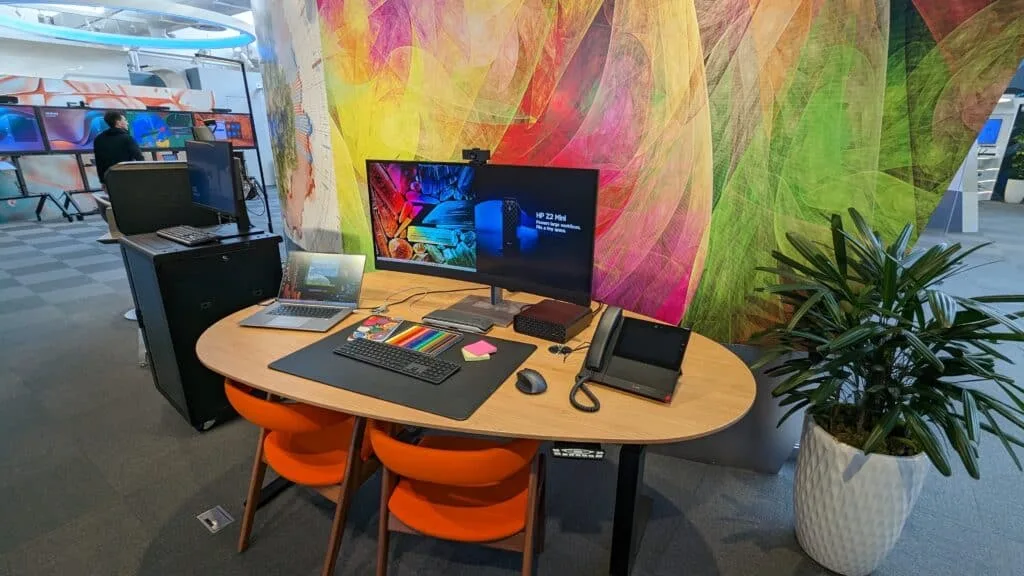
Another turning point in the magnificent history of Hewlett-Packard took place in 1966 when the launch of 2 products took place. Firstly, his first personal computer -model HP 2116A-, and a couple of years later the promotion of the first programmable scientific desktop calculator -HP 9100A-.
As a result of the fever of innovation that was being experienced in those times, new technologies emerged such as the first computer with a touch screen -launched in 1983- and the first inkjet printer, known in the market as HP ThinkJet -1984-.
HP already breathed agility
Long before corporations like Google or Amazon took into account the value of their employees, Hewlett Packard had already done so in 1973, becoming one of the first companies to establish a flexible schedule.
Focusing on the work well-being and motivation of each person, HP from the beginning sought a way to motivate and retain its people on a daily basis: providing flexible schedules so that they could spend more time with their families or enjoy themselves. to practice some other hobby. Personalized gifts and stock options were also offered as benefits.
20 years later, HP also ventured into remote work in order to increase the work environment within the company. Who would have thought!
We invite you to follow closely this special and exclusive series of notes on Silicon Valley, to travel for a few minutes to the mecca of technology!