
Consultancy · Marketing
Social distancing and technologies that bring people together:
When the pandemic began, online media realized that innovation is the best option to grow their market.
Before, many of these organizations were moving slowly toward expansion and adoption of technologies to improve viewer experiences, but events in recent years have considerably accelerated new interactive developments.
In the context of Covid-19, media helps people stay connected. During times of social distancing, They provide experiences that allow viewers to break the monotony of life in a pandemic.
By including new formats and technological innovations, consumers who increasingly seek more value in the digital media they consume, get what they need. Thus, technological advance adapts to demand.
Promoting these new innovations will not be in vain once the pandemic ends:
In contrast, new developments that allow people to connect through media content and experience live events, all from a distance, will become commonplace for viewers around the world.
How to create experiences that bring people together?
Let's explore how media companies can create meaningful experiences that bring people together when a physical meeting isn't possible.
Before the pandemic, there were platforms that allowed people in different locations around the world to watch shows and movies, while chatting via messages at the same time.
Given all the social time we have lost and continue to lose as restrictions continue in many parts of the world, it is vital to take this to the next level.
This means making "social viewing or experience" possible on multiple platforms and in different ways. For example:
- Media companies provide viewers with a live sporting event within a platform compatible with their mobile devices, to send messages, emojis and voice notes to each other, while watching the game.
- These social viewing platforms should allow people to choose between connecting with one or two viewers or entire groups of friends.
- The tools can work on set-top boxes and mobile devices, and a chat box that appears on the TV screen.
“Social viewing” is ideal for people who love to watch their favorite show, a live sporting event, a new movie or old classics with their friends and family, but now can't do so due to the restrictions necessary due to the pandemic.
A good option: mixed reality
Existing as a more affordable way to harness the power of Virtual Reality, mixed reality experiences are an "in-between."
The viewer can switch between the virtual world and their usual viewing space.
With cardboard virtual reality glasses, or more advanced devices, consumers can participate in any live event, whether it's their favorite band's concert or a soccer game.
Picture this: you're watching a live concert on your TV, the band starts playing their favorite song, and the crowd goes crazy.
- You put on the virtual reality glasses and you are immediately transported to the concert, with a 360-degree view of the stage and the surrounding crowd. Not only that, but you also have your surround sound system connected to the platform, making the experience even more sensory.
Some musicians have already taken advantage of concerts in the time of Covid, such as Travis Scott, whose live show was held within the Fortnite gaming platform and garnered 12.3 million simultaneous viewers in April 2020.
- Travis Scott not only appeared as a holographic avatar, but viewers were also treated to psychedelic visuals, which would not be possible in a live concert.
- John Legend also launched his virtual reality experience last year, performing a concert through the virtual music platform Wave.
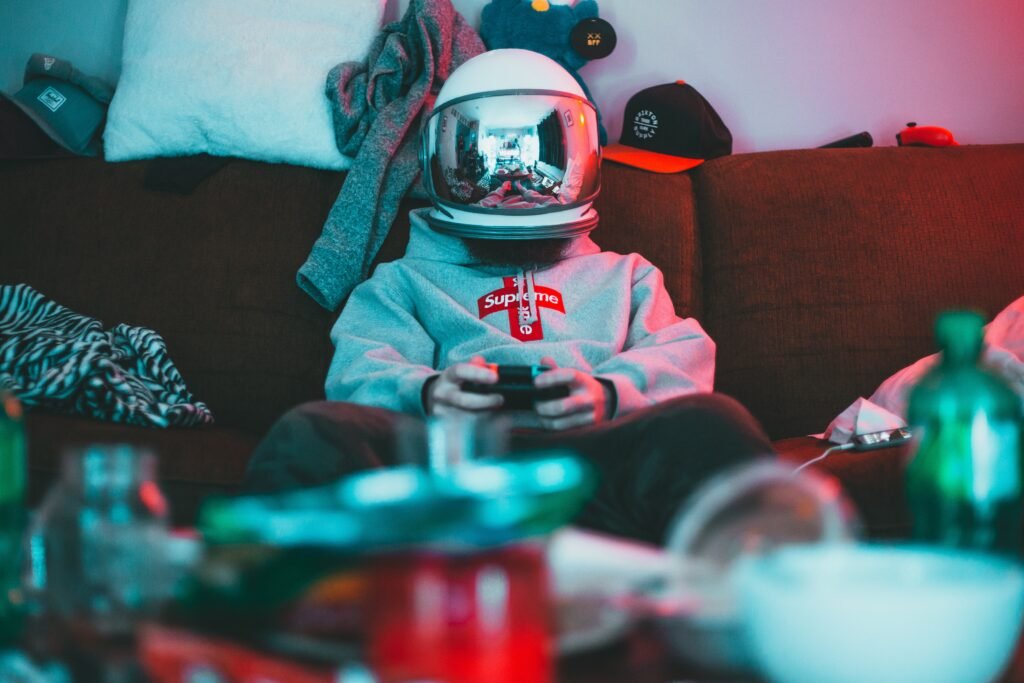
- You are watching your football team play a crucial match from the comfort of your living room. It's the last few minutes, and their best striker takes the ball and starts running towards the goal. The fans are cheering and you want to be part of the action: all you have to do is put on your virtual reality glasses and you will immediately have front row vision to see the goal.
Of course, technology will never replace being there in person, but it may be the best option when being at the physical event is simply impossible, either because of social distancing, or because you are in a distant location.
Another original way to bring people together, through technology:
- Tele-hugs: the idea was born inspired by a reality, since the Covid-19 pandemic began, many people have not been able to hug family or friends due to safety and prevention measures.
- The Reverso collective and its promoter Jaime del Val, founders of the multi-year European project METABODY, presented in the French city of Toulouse, a new project with different techniques, which seek to reinvent social distance in times of pandemic.
This group articulates art and technology, and on this occasion it sought to innovate by creating a flexible robotic structure, which allows it to hug the person who approaches; through sensors worn by another person at a distance.
For this device they integrated video calling, virtual reality and video game techniques.
Another reason to believe that the technological innovations that emerged and are still growing, from the pandemic, will continue to be there once “normality” returns, because there will always be people at a distance, wanting to share moments, having the feeling of proximity.
Virtual experiences create new revenue streams
Many media companies are considering investing in this technology and think:
And what will happen when things return to “normal”?
The reality is that most of the innovations adopted during the pandemic will remain, even after vaccines are fully rolled out and restrictions are lifted.
If you consider how convenient it is to have food delivered to your home from your favorite restaurant, or how you can now fit an online yoga class into your busy day...
Would you leave those opportunities behind when social distancing restrictions lift?
The same happens with innovations in the media and broadcasting:
There will always be times when people are separated and cannot physically connect, which opens the opportunity for “social observation.”
Live event companies can now generate new sources of income by providing a virtual experience to people around the world, if they cannot travel to those places and want to enjoy them from their homes.
As many countries move towards mass vaccination, there is no doubt that people will quickly return to live music events, sports games and simply spending time together and enjoying their favorite media content. But that doesn't mean that social observation and mixed reality will fall by the wayside.
Just like before the pandemic, there will always be concerts we want to attend and people we want to hang out with but can't. This is where new innovations come in, and media outlets that want a piece of the pie must invest now, to meet the demands of today's and tomorrow's viewers.
Media companies now have a way to bring people together and allow them to adapt to their pre-pandemic social activities, regardless of the distance between them.
Technology can be used to unite us and communicate better, but also to distance us even more.
The objective will always depend on us, who as users, provide guidelines for technological innovators to present projects that respond to those needs.