
Marketing
The history of advertising.
We live surrounded by advertising. While we walk on the street, when we listen to the radio, if we sit down to watch television, too. When we get on the computer to read the news of the day, when we grab our cell phone to browse Instagram. It is so, so present in our lives that it has already become common currency in everyday life.
If we go back to its origins, there are many who claim that advertising began long before Christ, in ancient Greece, with the famous “word of mouth”. In fact, this advertising strategy is still valid today and is known as Word of mouth. Without going into much detail, this method consisted of announcing information about a variety of products in the plazas, with the intention of convincing pedestrians to buy them. In this way we see howthe voice was the first advertising medium.
This fact, although it was only the beginning, meant the beginning of a very long history that would find its first transformation more than 2000 years later, in 1450, with the invention of the printing press.
Serial production.
After orality, which was the first form of communication for human beings, writing emerged in response to the need to record and record what was done/said. Clearly the word-of-mouth modality was wearing out, ceasing to be sufficient for civilizations that, like now, were constantly transforming and evolving. If we follow this pattern, writing definitely marked a milestone in the history of communication, but it reached a limit where its possibilities were much less than the new evolutionary demands.
We know that advertising, to be effective, needs to reach many people, so mere writing, that is, without printing, was not enough. First, because “knowing how to write” was something for a few, for the elite, for scholars. Imagine then how exclusive it meant to know how to read! And secondly, because the simple fact that all the writings were done one by one, by hand, slowed down and made any mass intention impossible.
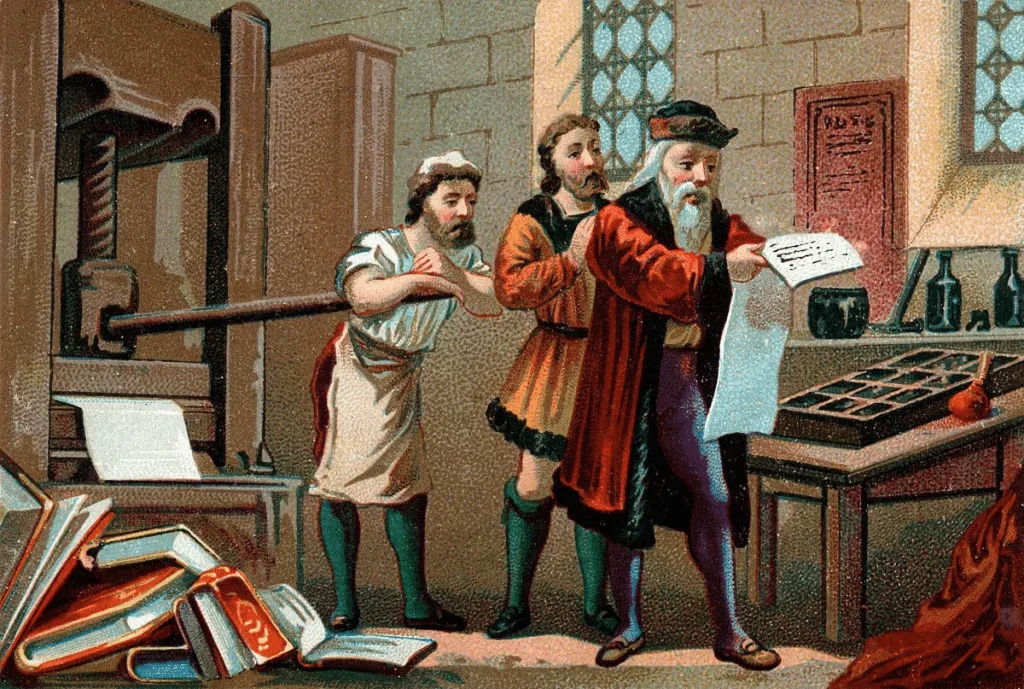
In 1450, Johannes Gutenberg changed history forever by inventing the printing press, the first mechanical method that allowed large-scale reproduction of images and texts. This gave rise years later to the written press, where advertising found the perfect nest to develop.
The kick.
In its first appearances in the newspapers, advertising did not have much presence. By not having a clear communication strategy, the only thing that differentiated it from word of mouth was that now the words were written. It lacked persuasive language and its location on the page was not striking either.
Little by little it was polished. The first sign of organization was having established an advertisement section in the newspaper. However, it was not until 1760 that advertising began to develop with the purposes for which we know it today.
And... What happened in 1760? Nothing more and nothing less than the beginning of what was known as thefirst industrial revolution. If we clarify that there is first, it means that there were two. This is so that we can measure what these processes meant in the history of humanity, not only at an industrial level, but in all areas of society.
The sudden and rapid appearance of hundreds of companies and industries led, on the one hand, to increase production, and on the other, to a wide variety of products circulating in the market. Today, in 2024, we know that consumption also became widespread, but back in those yearswhat was there between production and consumption? Advertising.
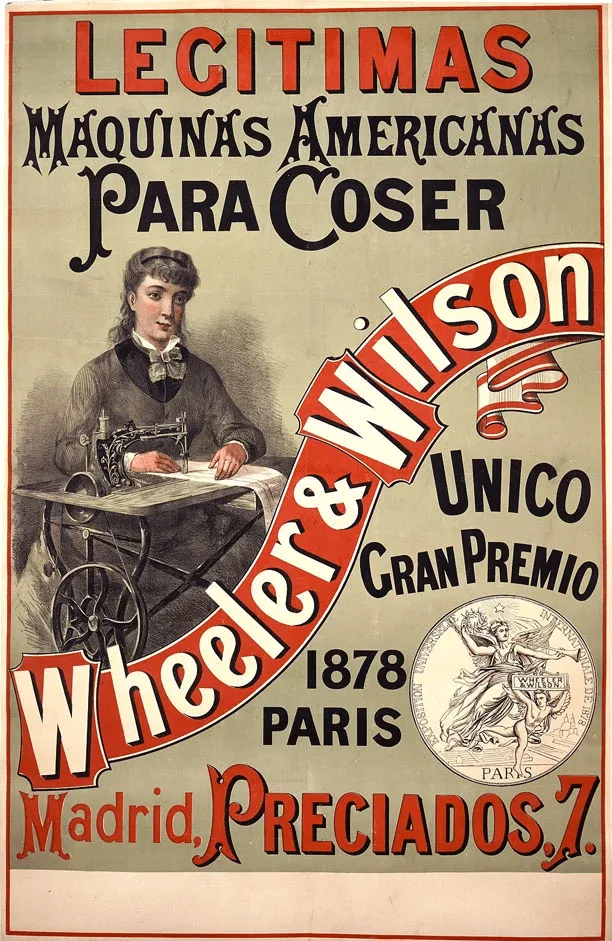
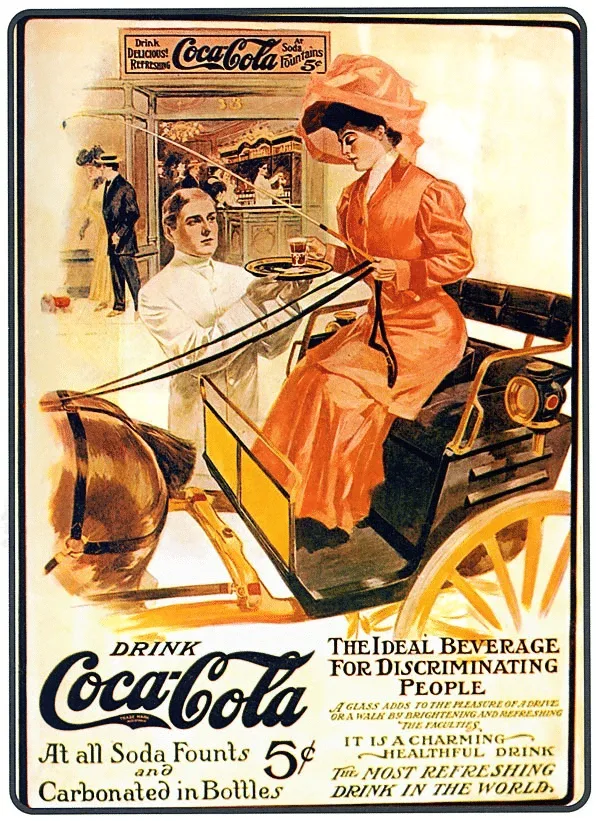
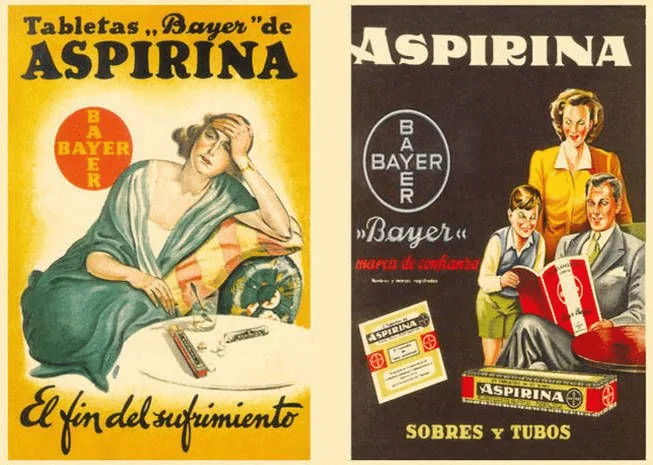
Advertising acted as a link between products and consumers. Through the development of its own language, it was able to persuade, convince and encourage purchases.
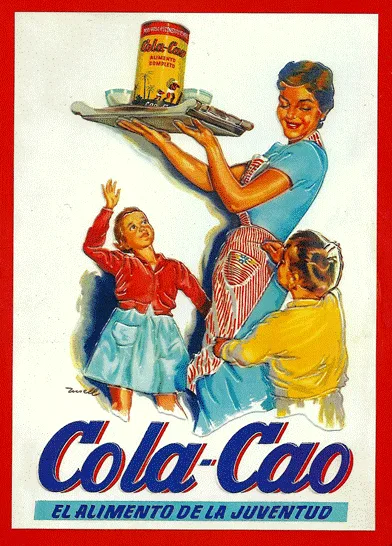
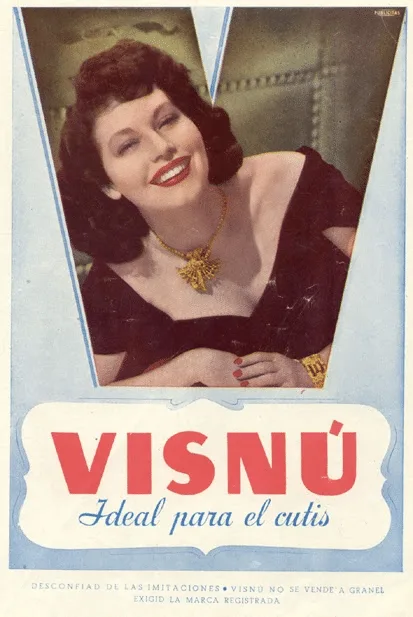
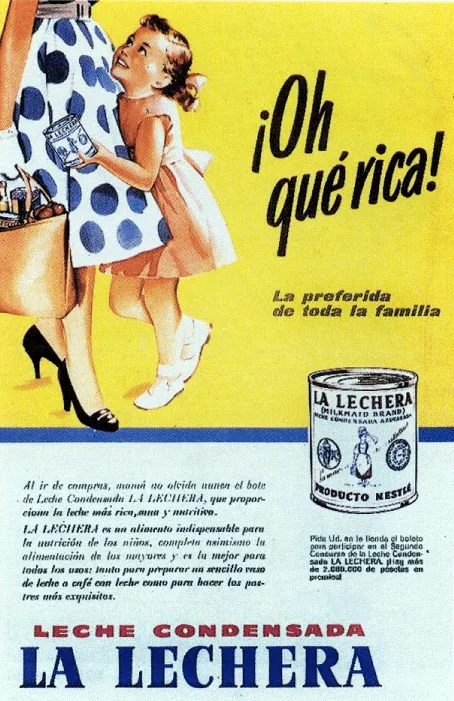
Some examples of advertising:
Radio and TV.
Radio was a pioneer of commercial communication systems. Although this was not the case from the beginning, with the advance and establishment of capitalism as a hegemonic economic system, the majority became commercial stations, that is, they had advertising as their main source of profitability.
Later, with the arrival of television, advertisements embarked on a path of greater creativity. Advertising in this medium required exploiting a lot of expressive resources that were not necessary before with radio. This meant a significant advance in production, research and studies.
We leave you a small compilation of old Argentine advertisements so you can see their beginnings in this medium:
Internet.
Although the first case of online advertising dates back to the late 70s, when the first email with an advertisement was sent, it was not until the 90s when the digital format really began to emerge more strongly. Then, more properly speaking, Internet advertising arises.
With digital marketing, it became much easier to reach people and accurately measure the results of a campaign, something that until then no medium had allowed.
In this way, advertising and marketing work together: marketing is concerned with understanding the target audience and developing strategies to serve it and advertising focuses on reaching it with efficient communication. In this way, we can say that advertising aims to disseminate information and marketing aims to make the sale.
Some examples of internet advertising:



Digital advertising is a very broad topic, with many interesting topics which cannot be covered in a single post. That's why we use this article as context to break down the topic in future posts.
If you liked it, follow us on our RRSS so you don't miss any news.