
Development
Landing page vs. Web page
“What is better? A landing page or a website?🤔”. Although both types of pages are part of a digital strategy, their characteristics, functionalities and uses can vary significantly.
A landing page is specifically designed to attract and convert visitors into potential customers through a direct and distraction-free approach. On the other hand, a complete website offers a richer and more detailed browsing experience, providing extensive information about a company or a product.
In this article we are going to delve into these differences, giving you a detailed guide to help you decide which is the best option for your specific needs😉
Landing Page
Definition.
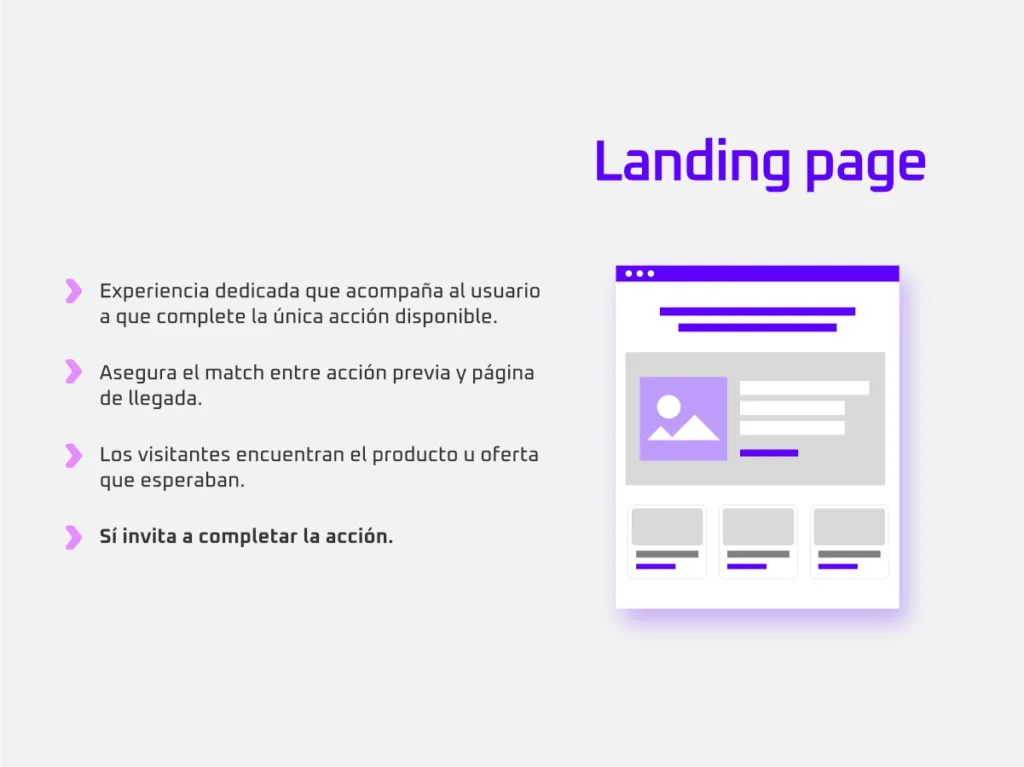
A landing page, or landing page, is a web page designed specifically to capture the attention of visitors and convert them into leads or customers. Generally, it is accessed through online advertisements, marketing emails or links on social networks.
What is the objective of a landing?
Your main goal is to maximize the conversion rate. This is achieved through focused design and concise content that guides the visitor to a specific action, such as filling out a form or making a purchase.
Characteristics of a landing page.
- Simplified structure:
Landing pages have a simplified structure that focuses on a single objective or message. They don't have complex navigation elements, which helps keep the visitor's attention on the call to action.
- Focus on conversion:
The design of a landing page is geared towards conversion, using elements such as eye-catching headlines, attractive images and persuasive text to motivate the visitor to take a specific action.
- Calls to action (CTAs):
CTAs are key elements on a landing page. These can be buttons, links, or forms that invite the visitor to complete an action, such as "Sign up now" or "Buy."
Specific functionalities of a landing.
- Data collection form:
A landing page usually includes a form to collect visitor data, such as names, emails, and other relevant details. This is essential for lead generation.
- Specific offers and promotions:
Used for specific promotions, such as discounts, limited-time offers, or giveaways, incentivizing visitors to act immediately.
- Conversion tracking and analysis:
Landing pages are designed to facilitate the tracking and analysis of conversions, allowing marketers to measure the effectiveness of their campaigns and optimize their strategies.
Uses of a landing page.
- Digital marketing campaigns.
Landing pages are essential in digital marketing campaigns, providing a specific destination for online ads and marketing emails.
- Product or service launches.
They are ideal for launching new products or services, offering a focused platform to present the offer and capture customer interest.
- Lead capture.
They are used to capture leads by offering exclusive content, free downloads, webinars and more, in exchange for visitors' contact information.
Web page
Definition.
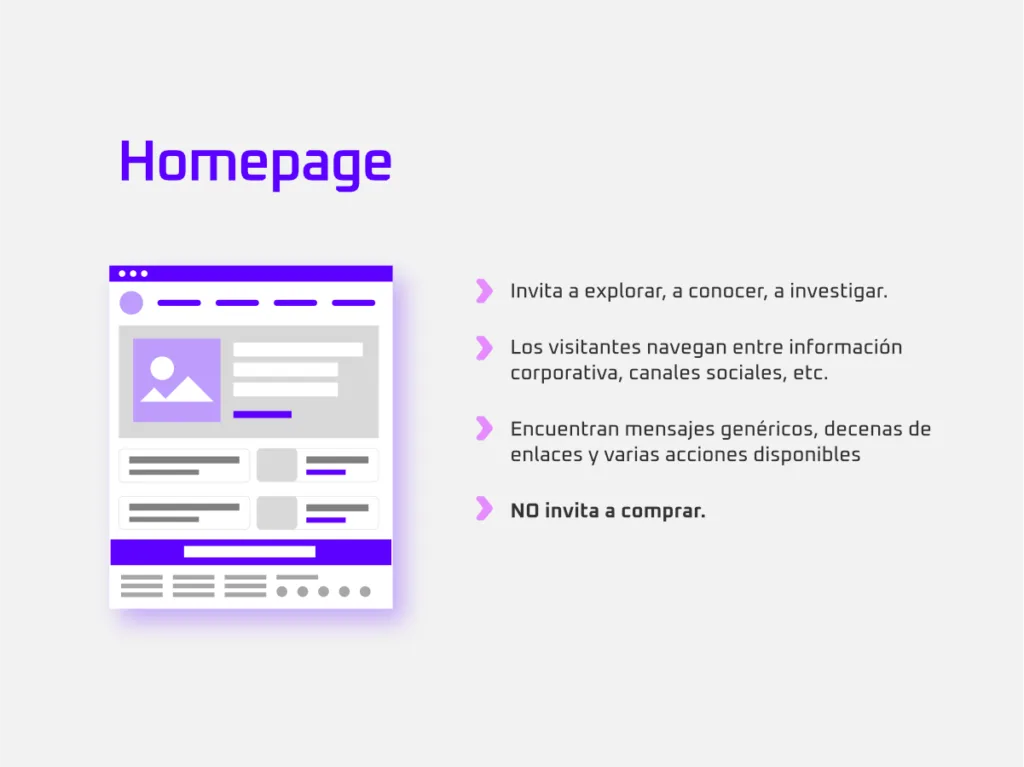
A complete web page is a website that contains multiple pages and sections, offering a complete browsing experience (that's why we call it “complete”). It encompasses a variety of content and functionalities, from information about the company to blogs, online stores and more.
What is the purpose of a complete web page?
Its objective is to provide a comprehensive digital presence for a company or organization. This includes providing detailed information, facilitating communication with customers and serving as a platform for various online activities.
Characteristics of a complete web page.
- Full navigation:
A complete website offers structured navigation with multiple sections and subpages. This allows visitors to explore different areas of the site and find the information they need.
- Multiple pages and sections:
Includes various pages such as "Home", "About Us", "Services", "Blog", "Contact", among others. Each page is dedicated to a specific aspect of the business or organization.
- Diversity of content:
A complete website features a variety of content, including text, images, videos, blogs, case studies and more, to attract and retain visitors.
Specific functionalities of a web page.
- Blog and news:
A complete website usually includes a blog where articles, news and updates are published, helping to keep visitors informed and improve the site's SEO.
- E-commerce and virtual stores:
Many full-fledged websites have e-commerce functionality, allowing visitors to purchase products or services directly from the site.
- Service and product pages:
They include detailed descriptions of the services and products offered, with information on features, benefits, prices and more.
Uses of a web page.
- Corporate presence.
A comprehensive website serves as a company's official digital presence, offering detailed information about its mission, vision, history and team.
- Information platform.
It acts as a centralized information platform, providing visitors with everything they need to know about the company and its offerings.
- Communication channel with clients.
Make it easy to communicate with customers through contact forms, live chat, emails, and more.
| LANDING PAGE | COMPLETE WEB PAGE | |
| DEFINITION | Page designed for specific conversions. | Website with multiple pages and sections. |
| OBJECTIVE MAIN | Maximize conversion rate. | Provide a comprehensive digital presence. |
| STRUCTURE | Simplified, without full navigation. | Full navigation with sections and subsections. |
| CONTENT | Focused and concise. | Varied and detailed. |
| CTAs | Key elements, such as buttons and forms. | Various actions distributed on different pages. |
| SPECIFIC FUNCTIONALITIES | Data collection form, special offers. | Blogs, virtual stores, product/service pages. |
| USES | Marketing campaigns, launches, lead capture. | Corporate presence, information platform, communication with customers. |
| ADVANTAGES | Higher conversion rate, lower development cost. | Versatility, better user experience, greater potential for SEO. |
| DISADVANTAGES | Functional limitations, lower long-term impact. | Increased complexity and development cost. |
| ANALYSIS AND MONITORING | Focus on conversions and tracking of specific campaigns. | Comprehensive analysis of user behavior throughout the site. |
| DEVELOPMENT COST | Generally lower than a complete website. | Generally higher than a landing page due to complexity. |
This comparison chart serves as a summary, highlighting the key differences between a landing page and a full web page, helping you make an informed decision about which to use based on your specific needs.
What did you think of this info? If it helped you, follow us on our social networks so you don't miss out on our educational content!